
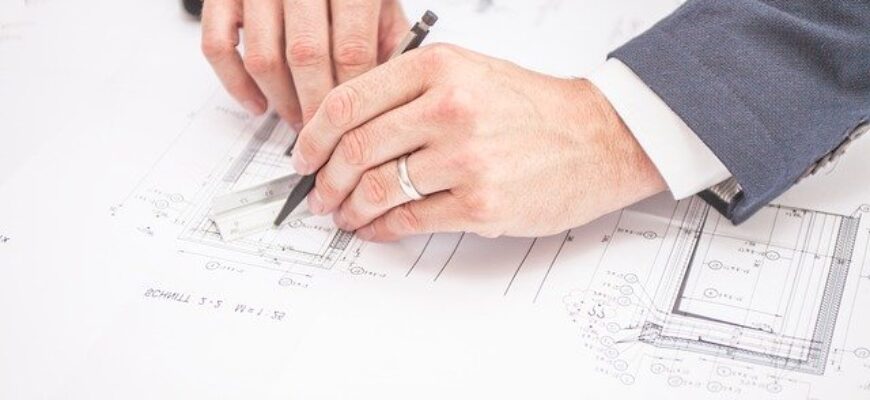
Before buying a second-hand property, checking the percentage of usable building rights can be decisive in making sure the seller’s asking price is consistent, and in some cases in finding a “bargain”.
So, besides the usual legal checks, it is essential to find out the ratio between the area actually built and the area that could potentially be built.
The existence of unused building rights can radically change the financial, technical and legal aspects of a property purchase.
Many legal and technical checks must be carried out before signing the purchase contract for a property.
In particular, the buyer must find out the identity of the sellers, the content of the Land Registry extract, the plans and the terms of the purchase contract, and put together a precise financial and legal structure.
Checking the percentage of building rights attached to a property is essential to determine its value.
Although building rights are set in the urban planning maps, municipal committees have special powers to approve exceptions.
For example, municipal committees are entitled to allow an owner to build beyond the boundary lines of their land, to authorise deep excavation (for example to build an underground car park) or to approve a building taller than the permitted height.
Any exception of this type necessarily means an increase, sometimes a significant one, in the value of the property.
How is the value of a property calculated?
There are three criteria for calculating the value of a property:
1. The location of the property: its geographical position influences its price. For example, the value per square metre of apartments in the heart of TEL AVIV will be higher than that of those in cities far from the country’s economic centre.
2. The status of the property: whether it is intended for residential or commercial use.
3. The percentage of unused building rights.
This last criterion is sometimes decisive in getting the maximum value out of the property.
How are building rights calculated?
To find out the building rights, you must check the buildable percentage authorised by the urban planning maps in relation to the total area of the plot.
If the planning maps state that the building rights are 75% for a given area and the plot is 400 square metres, it will be possible to build a building whose area does not exceed 300 square metres.
However, building rights are generally divided into sub-categories, so a distinction must be made between main areas, such as residential space, and secondary areas, such as storage rooms and parking spaces.
On the other hand, if a building already stands on the plot, the remaining building rights can be found by comparing the built area with the authorised area, even though the latter has not been used in practice.
The existence of illegal construction
Besides the question of building rights, you must make sure that the seller has not carried out illegal construction, built without a building permit or exceeding the authorised percentage of building rights.
A visit to the property by an expert, before the purchase contract is signed, makes it possible to check that the legal plans registered at the Land Registry and the town hall match the actual physical situation of the property.
Rimon Nadlan, real estate agency in Ra’anana headed by Karine Ayache, specialises in the purchase of apartments, rentals, new projects and Tama 38 projects.
It welcomes dozens of new immigrants every year from France and elsewhere.
Thanks to Credit Immobilier en Israel, whom we recommend as a financial partner for all your projects.
Please note: The information contained in this article is the sole responsibility of the author and cannot replace specific legal advice. It is valid only as of the date it was written.
Maître Yonathan TSADIKA
+ 972 (0) 50 486 34 76
yonathan@tsadika.co.il


