
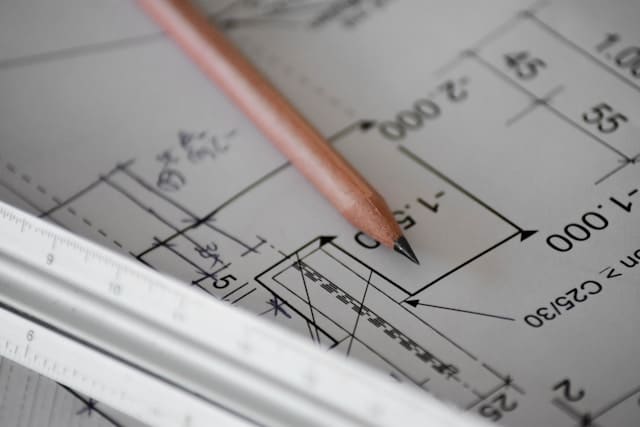
The specification document (cahier des charges) is one of the legal documents annexed to the purchase contract for an apartment under construction; it sets out the technical aspects and the materials of the apartment being built.
What is the legal value of the specification document?
The specification document is a technical description annexed to the purchase contract that sets out precisely the services and finishes the developer undertakes to provide in the apartment and in the common areas.
It is by studying the specification document carefully, before signing the purchase contract, that it is possible to learn the quality of the materials with which the apartment will be built.
Amendment No. 5 of the law on real estate transactions describes which items must be attached to the purchase contract of an apartment under construction.
Under the law, the specification document must be attached to the purchase contract. It must be drafted with a precise content and include the mandatory statements regarding the services provided.
Content of the specification document
The specification document is made up of two essential parts: the one relating to the common areas and the one relating to the apartment.
It includes several sub-chapters:
– The general description of the property
This part includes the legal description: address, cadastral details, identity of the landowner, and the general description of the building and of the apartment.
– The calculation of the apartment’s area
The area of the apartment and of its annexes, such as a parking space, terrace, storage room, etc., will be precisely stipulated.
The specification document will also describe the method used to calculate the areas. Under Israeli law, the area of the apartment also includes the thickness of the walls.
For a wall facing the outside or the common areas, its area is fully included in the apartment’s area. However, for a party wall between two apartments, the thickness of the wall is shared equally between them.
In addition, the permitted differences between the area stated in the specification document and that of the apartment as built are also predefined. Most contracts allow the deviations provided for by law, namely 2% for areas and 5% for other items.
If these permitted deviations are exceeded, the developer is considered to have failed to meet its contractual obligations and the buyer may take legal action against it.
– The description of the building
The chapter describing the building details the common areas of each floor, including the roof and the basements. It also specifies the construction materials used, such as the type of concrete, tiling, wall and floor coverings, doors and windows, etc.
This part also includes information on the building’s lifts.
– The detailed description of the apartment
The chapter describing the apartment specifies the type of tiling for each room, the kitchen and bathroom cabinets (when included in the purchase price), the doors, windows and blinds, the taps and sanitary ware, the electrical installations (sockets, light fittings, etc.), the air conditioning and heating, and various fittings. In most contracts, shower screens are not included and will be installed by the buyer after the handover of the keys.
New buildings also include a safe room, which must meet the strictest safety standards.
– Common installations and safety equipment
Israeli standards provide for the installation of several safety systems in the common areas of the building and in the apartments, in particular a fire protection system, including smoke detectors, extinguishers and fire doors.
Conclusion
The specification document is one of the major elements of the purchase contract and requires careful study before the contract is signed.
Please note: The information contained in this article is the sole responsibility of the author and cannot replace specific legal advice. It is valid only as of the date it was written.
Maître Yonathan TSADIKA
+ 972 (0) 50 486 34 76
yonathan@tsadika.co.il


